Community Colleges
Many community colleges around the country have opened their doors to homeschooled teenagers, giving them an opportunity to start their college careers early, to gain classroom experience and college credit, to challenge them with more difficult materials, and to expand their horizons. Many parents look to community colleges to provide instruction in materials that they are not well suited to teach themselves.
Links

And What About College?: How Homeschooling Can Lead to Admissions to the Best Colleges & Universities
Get all your questions about helping your homeschooled student apply and get accepted to college answered with this resource. It discusses transcripts, diplomas, education choices, online colleges, and more. If you are worried about whether your homeschooled student can have a successful college search, then this book will help allay those fears and offers good support and information.
American Association of Community Colleges (AACC)
Founded in 1920, the American Association of Community Colleges (AACC) has, over four decades, become the leading proponent and the national “voice for community colleges.” Today, AACC’s membership represents close to 95 percent of all accredited U.S. two-year community, junior and technical colleges and their 10.5 million students, as well as a growing number of international members in Puerto Rico, Japan, Great Britain, Korea, and the United Arab Emirates. The colleges are the largest and fastest-growing sector of U.S. higher education, enrolling close to half (45 percent) of all U.S. undergraduates. AACC supports and promotes its member colleges through policy initiatives, innovative programs, research and information and strategic outreach to business and industry and the national news media.
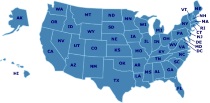
Looking for Another State?
Featured Resources
As an Amazon Associate, we earn from qualifying purchases. We get commissions for purchases made through links on this site.

A Little Way of Homeschooling
This book is a compilation of the experiences of 13 different homeschoolers and how they incorporated an unschooling style of teaching in their homes. This book addresses the question of whether a Catholic can happily and successfully unschool. This home education approach is presented as a sensible way to access the mystery of learning, in which it operates not as an ideology in competition with the Catholic faith, but rather a flexible and individual homeschooling path.

Climb Inside a Poem for Children Big Book of Poems
The poetry anthology, Climb Inside a Poem: Original Poems for Children, uses the writings of contemporary children's poets, whimsical illustrations, and an expansive big book format (14"x 18") to create a 36-page poetry playground. The children's poems crafted expressly for this collection are written by acclaimed children's authors.

Creative Home Schooling: A Resource Guide for Smart Families
For a comprehensive guide to home-based education, that does not promote any particular curriculum or religious view, this is one book parents should buy! Parents will appreciate practical advice on getting started, adjusting to new roles, designing curriculum that is both child-centered and fun, and planning for social and emotional growth. Parents will turn to their favorite chapters again and again. Features interviews and tips from many homeschool parents as well as long lists of resources...

Morning by Morning : How We Home-Schooled Our African-American Sons to the Ivy League
Home schooling has long been regarded as a last resort, particularly by African-American families. But in this inspirational and practical memoir, Paula Penn-Nabrit shares her intimate experiences of home-schooling her three sons, Charles, Damon, and Evan. Paula and her husband, C. Madison, decided to home-school their children after racial incidents at public and private schools led them to the conclusion that the traditional educational system would be damaging to their sons’ self-esteem...

They're Your Kids: An Inspirational Journey from Self-Doubter to Home School Advocate
For many people, their schooling was uncomfortable, tedious, and sometimes a waste of time and energy. This book offers the idea that the public school system is tragically flawed and that we are able to do better for our own children. Sam Sorbo, mom of three and wife of actor Kevin Sorbo, took the leap into homeschooling and found the joy and success she was seeking. Included are strategies for working parents, those who are scared to take the leap, and anyone who wants the best for their child...